Blog
What to Expect When You Call a Locksmith for Safe Opening
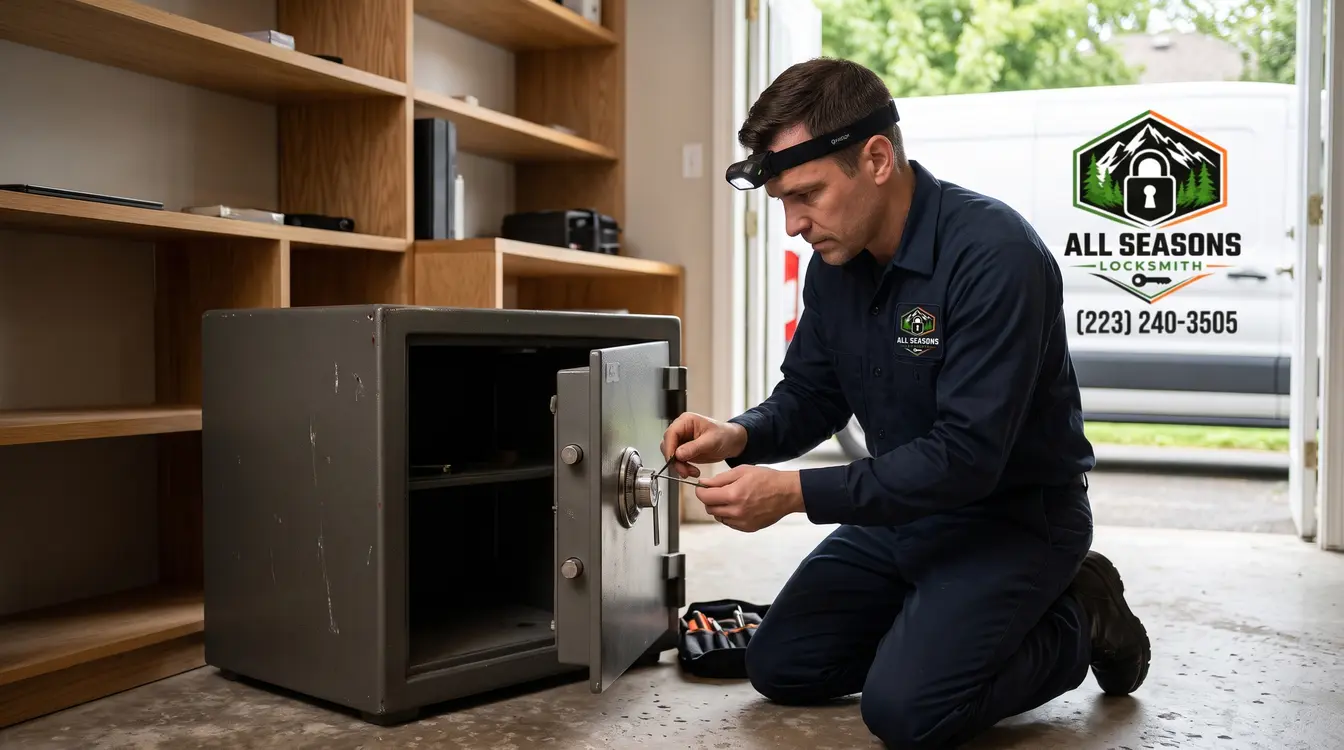
Shut out of your own safe and unsure who to call? Here's how a safe opening locksmith job goes. You phone, you describe the safe, you get a quote. The technician shows up, checks that the safe is yours, and tries to open it without drilling. If the lock won't allow that, they tell you before they reach for the drill.
Quick answer: Have the make and model, the lock type and some proof of ownership ready. Ask for the quote on the phone. Expect an ID check at the door. A drill comes out last, not first.
What is safe opening?
Safe opening means getting a locked safe open when the combination or key is gone, without wrecking the safe. Lots of people search "safe cracker near me," which sounds like a heist movie. The real job is slower. The locksmith studies the lock, picks the route that does the least harm, and works the door open. When the lock needs it, they reset the code before leaving. That way you aren't standing in front of the same safe next month.
The reasons are mundane. The code lived on a sticky note that went into the trash. The keypad died with the batteries. A key snapped in the lock. The previous owner sold the house and took the combination with them. Or a relative passed away and the family is left with a safe nobody can open. You didn't do anything wrong in any of those cases.
What does a safe locksmith ask on the phone?
Expect the first call to take a couple of minutes. Your answers tell the locksmith what to load into the van, and whether one trip will cover it.
| Question | Why it matters |
|---|---|
| What brand and model is the safe? | Different makes use different locks and different weak points |
| Does it open with a dial, a keypad, a key or a mix? | Mechanical dials, electronic keypads and key locks are opened differently |
| Where is it and how heavy is it? | Some safes are bolted down, built into a wall or sitting in a basement |
| What happened? | Forgotten code, dead batteries, a jammed bolt or a broken key each point to a different fix |
| Is the safe yours or part of an estate? | The locksmith needs to know what proof to expect |
| Who is calling and where is the safe? | A real local company will have you confirm the address and ask for a name |
One thing you won't hear from a decent shop is a promise to open "any safe in five minutes" before anyone has laid eyes on it. You will hear a quote before the van leaves. And if the voice on the line won't give you a business name, or keeps pushing you to say yes without details, hang up. That's the same pattern we describe in our post on spotting a locksmith scam.
What happens when the locksmith arrives?
Most visits follow the same rhythm, and it's worth knowing before the doorbell rings.
First, ID. The technician shows theirs and the van has the company name on it. Next comes your turn. You'll be asked to prove the safe is yours, with a photo ID that shows your address, a receipt, a lease or estate papers. Some people bristle at that. Don't. We'd worry about a company that skipped it.
Then the technician looks the safe over before touching the lock. Dents, scorch marks, a bent handle, a keypad hanging loose. Any of those changes the plan. Gentle methods come first: on a keypad safe that may be nothing more than a power check, on a dial or key lock it's careful work on the lock itself.
Drilling comes last. If a lock has failed or a bolt has seized, it can be the only way in, and a good technician says so before starting, points out where the hole goes and tells you what you'd repair afterward. Once the door is open, the lock gets tested and, most of the time, a new code or key is set.
If you want the full picture of how this fits with our other lockout work, our safe opening service page lists what we cover.
Will opening the safe damage it?
Often not. Now and then, a little. A forgotten code on a mechanical dial is one kind of problem, and a bolt jammed inside a fire safe is another. Safes exist to resist forced entry, so a few jobs leave a small drill hole or a repair behind. Better to hear that before the work than after.
Ask the technician whether the plan is likely to mark the safe, and what happens if the first method fails. A plan is what you want back. A shrug is not.
While you're deciding whether to keep the safe, it helps to know what its fire label means. The "fire" label on a safe is not a single guarantee. UL Solutions, which tests record protection equipment, explains that the class on a fire-rated safe's label, such as Class 350, indicates the maximum interior temperature reached during testing. UL also notes that Class 350 devices are intended to protect paper records, Class 150 to protect paper and nonpaper records such as magnetic tapes and photographs, and Class 125 to also protect flexible computer disks. Per UL, the tests are meant to show how equipment performs during a fire, not whether it is acceptable for use after one. That is why a safe that has been through a real fire, or one that has been opened by force, is worth having a locksmith look over.
The Safe Call Sheet
Safe jobs stall when the locksmith has to guess, so we hand customers a short worksheet. We call it the Safe Call Sheet. Fill it in before you phone.
| Line | What to write down |
|---|---|
| 1. Safe | Brand, model and color, plus a photo of the label if you can find one |
| 2. Lock | Dial, keypad, key or combination of those |
| 3. Problem | Lost code, dead keypad, broken key, jammed bolt or unknown |
| 4. Location | Address, floor, and whether the safe is bolted down or built in |
| 5. Proof | Photo ID, receipt, lease or estate paperwork |
| 6. Contents | What is inside and whether anything fragile or time sensitive is in there |
Six lines take about two minutes. The locksmith arrives with the right gear, and you skip a second visit.
Which kinds of safe lockouts are the most common?
Safe calls tend to sort into five groups.
- Forgotten combination. Older dial safes that sat in a closet for years. The lock is usually fine, only the memory is gone.
- Dead keypad. The batteries ran out and nobody remembered a backup. Sometimes a fresh set solves it. Sometimes the board has failed.
- Lost or broken key. Small home safes and cash boxes. A snapped key may have to come out before anything else happens.
- Inherited or bought safes. A home sale or an estate hands over a safe with no code attached.
- Jammed lock. A move, a drop or an attempted break-in can leave the bolt binding.
If you are in Harrisburg, Hershey, Camp Hill or Mechanicsburg, our Harrisburg service area page shows the nearby towns we cover.
What should you do after the safe is open?
Don't rush to shut the door again.
- Take out what you came for and check what else is inside.
- Have the lock reset or rekeyed, so the old code or the lost key stops working.
- Record the new code somewhere sensible, and never on the safe itself.
- Think about what actually belongs inside. Ready.gov, FEMA's public preparedness site, lists identification, financial and legal records, medical information and valuables as the four groups of items to safeguard. It suggests keeping paper copies in a fireproof and waterproof box or safe, a bank safe deposit box, or with a trusted friend or relative.
- Anything you can't replace deserves a second copy stored somewhere else.
Frequently asked questions
How does a locksmith open a safe without the combination?
It depends on the lock. Many jobs start with non-destructive methods suited to the lock type. Drilling is used only when those fail or the lock is damaged, and a good technician tells you first.
Will a locksmith open a safe that is not mine?
No, and you should not want one who would. Expect to show ID and proof that the safe belongs to you or that you have the right to open it, such as estate paperwork.
Can a locksmith reset the code after opening the safe?
Usually, yes. Most electronic and mechanical locks can be reset or rekeyed once the safe is open. Ask about it when you book.
Is there a safe locksmith near me in Harrisburg?
Yes. All Seasons Locksmith is a mobile service based in Harrisburg and covers Dauphin, Cumberland and Lebanon counties. Call (223) 240-3505 and describe the safe.
What should I do if the safe locks while I am away from the shop's hours?
Call and leave a message, since a mobile service can often book you first thing. Our hours are Sunday through Thursday, 7am to 10pm, and Friday during the day. We are closed Saturday.
Need a safe opened?
We are bonded and insured, locally owned and operated, and we serve Harrisburg and the surrounding towns. Call (223) 240-3505 and have the Safe Call Sheet in front of you.
Sources: UL Solutions, "Turning Up the Heat: A Sneak Peek into UL's Fire Testing of Safes," retrieved 2026-11-02, ul.com; Ready.gov and FEMA, "Safeguard Critical Documents and Valuables," retrieved 2026-11-02, ready.gov.
More from the blog
If the safe is part of a bigger lockout, our guide on choosing an emergency locksmith you can actually trust explains how to vet a company before you call, and what to do when you are locked out of your car covers the vehicle side.